


Bibimbap
rice
dairy-free
sautéed
everyday
main course
chewy
Korean
all seasons
Hot
Difficulty
medium
Time
1h 45m
Price Category
average
Calories
Medium
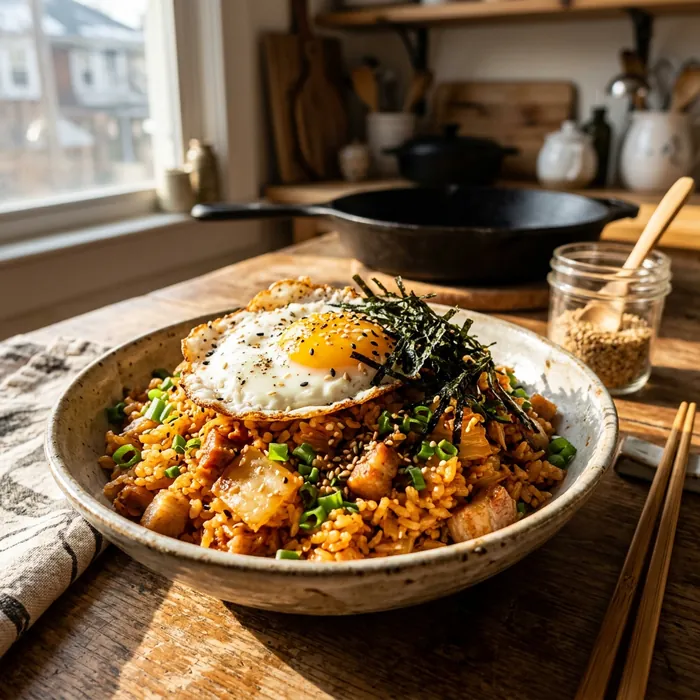
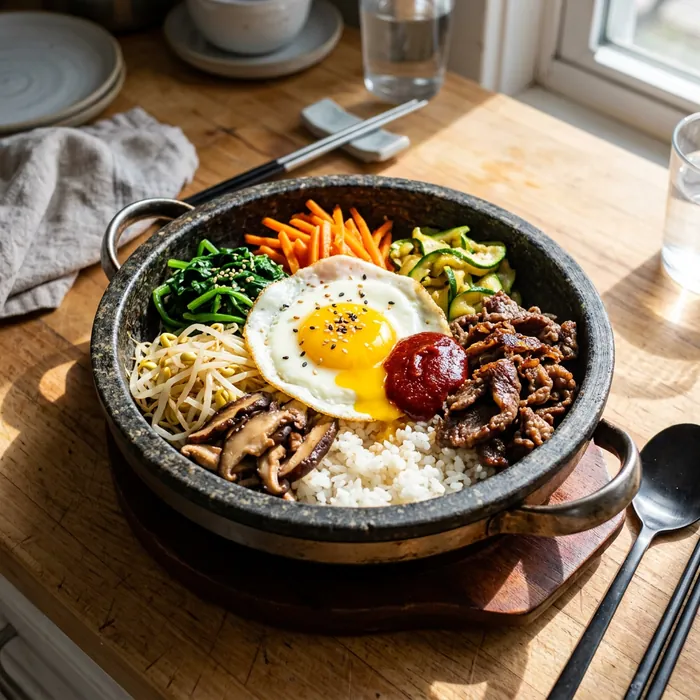
Bibimbap is an iconic Korean dish, whose name literally means 'mixed rice'. This colorful and nutritious meal is built on a base of rice, topped with various deliciously seasoned vegetables, thinly sliced meat (usually beef), and crowned with a fried egg. Everything is mixed together with a spicy gochujang sauce, resulting in a true explosion of flavors. It's a perfect choice if you're craving something special yet satisfying.
ingredients
Steps
Prepare Rice and Beef
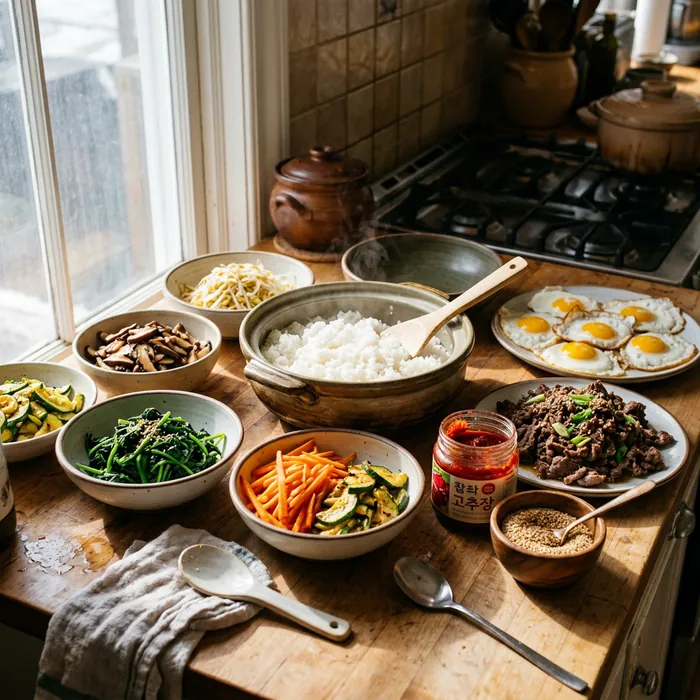
First, cook the rice according to package instructions, then set aside. Mix the thinly sliced beef with 2 minced garlic cloves, 2 tbsp soy sauce, 1 tbsp sesame oil, and 2 tsp sugar. Let it marinate for at least 15-20 minutes.
Prepare Vegetables
Blanch the spinach and bean sprouts in boiling salted water for 1-2 minutes, then immediately cool them in ice water, drain, and squeeze out excess water. Season both with a little sesame oil and salt. In a pan with a little oil, stir-fry the julienned carrots for 3-4 minutes, then the zucchini for 3-4 minutes, and finally the sliced shiitake mushrooms for 5-7 minutes until tender and lightly browned. Season each vegetable separately with a little soy sauce, sesame oil, and minced garlic.
Cook Meat and Eggs
In a hot pan with a little oil, cook the marinated beef over high heat for 3-5 minutes until cooked through and lightly browned. Remove the beef from the pan. In the same pan, fry the 4 eggs sunny-side up, ensuring the yolks remain runny.
Assemble and Serve
Place the cooked rice in a large bowl. Arrange the separately prepared vegetables and cooked beef neatly around the rice. Top with the fried egg. Before serving, add a generous amount of gochujang and sprinkle with toasted sesame seeds. When serving, thoroughly mix all ingredients in the bowl.
Extra Tips
► You can vary the vegetables according to your taste, try other seasonal ingredients like cucumber or radish sprouts.
► Adjust the amount of gochujang sauce to your liking; if you love spicy food, feel free to add more.
► The secret to perfect Bibimbap lies in fresh ingredients and careful preparation, don't rush the process!
Nutrition
| Per 100g | Per Serving 450g | |
|---|---|---|
| Calories | 200-250 kcal | 900-1125 kcal |
| Protein | 10-15g | 45-67g |
| Fat | 8-12g | 36-54g |
| Carbohydrate | 20-25g | 90-112g |
| Fiber | 2-3g | 9-13g |
| Sugar | 2-4g | 9-18g |