


Korean Bibimbap (Rice Bowl with Vegetables and Gochujang)
rice
dairy-free
sautéed
everyday
main course
crispy
Korean
all seasons
Hot
Difficulty
medium
Time
1h 30m
Price Category
average
Calories
Medium
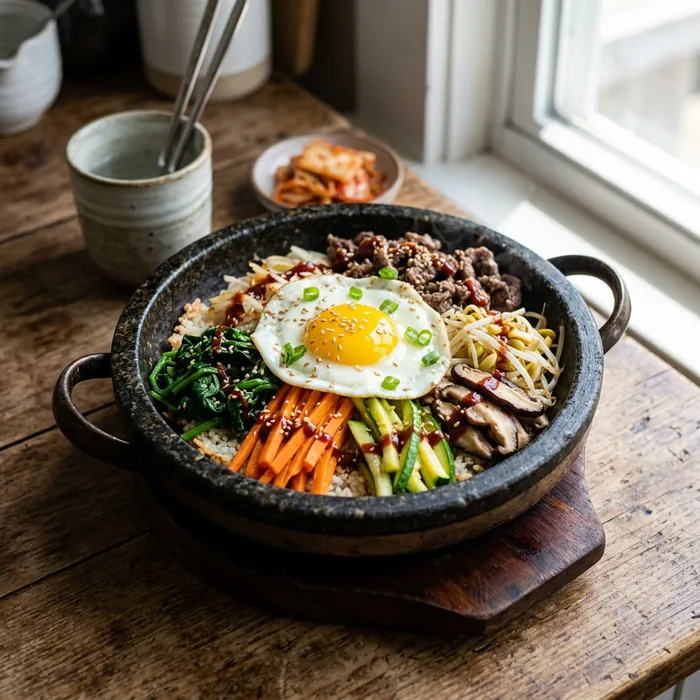
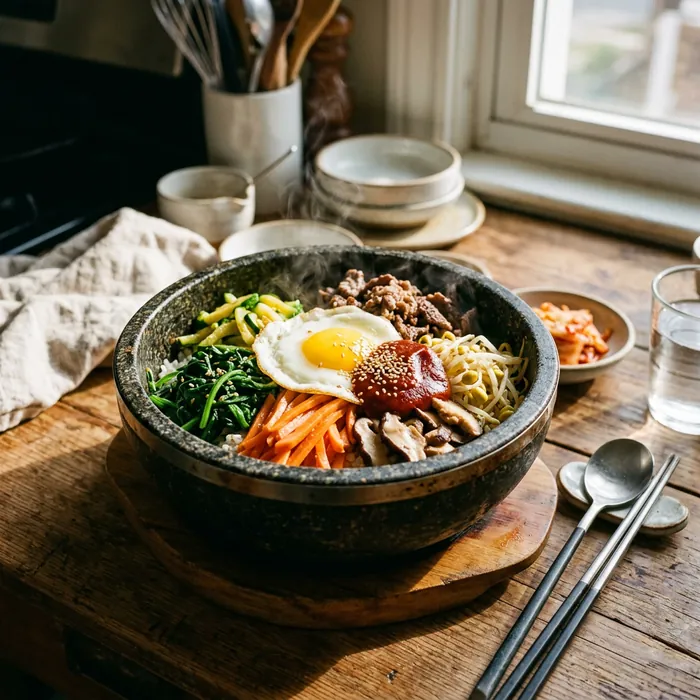
Bibimbap is an iconic Korean dish, whose name literally means 'mixed rice'. This colorful and nutritious meal strikes a perfect balance between fresh vegetables, juicy meat (or tofu), a soft egg, and spicy gochujang sauce. Every bite is an explosion of flavors that is simultaneously sweet, salty, sour, and spicy. Prepare this authentic Korean experience at home and enjoy the harmony of fresh, crispy, and creamy textures!
ingredients
Steps
Prepare Rice & Beef
Cook the short-grain rice according to package instructions. Meanwhile, marinate the thinly sliced beef with 1 tbsp soy sauce, 1 tbsp sesame oil, 2 minced garlic cloves, 1 tsp sugar, and a pinch of black pepper. Let it sit for at least 15-20 minutes.
Prepare Vegetables
Blanch the spinach in boiling salted water for 30 seconds, then immediately cool in ice water, squeeze out excess water, and mix with 1 tsp sesame oil, 1 minced garlic clove, and a pinch of salt. In a pan with a little vegetable oil, sauté the julienned carrots, zucchini, and sliced shiitake mushrooms separately for 3-5 minutes each, until tender but still crisp. Season them with a little soy sauce and sesame oil. Blanch the bean sprouts for 1-2 minutes, then season with salt and sesame oil.
Cook Beef & Eggs
In a pan over medium heat, cook the marinated beef for 5-7 minutes until browned and slightly caramelized. In the same pan or another, fry 4 eggs sunny-side up, ensuring the yolk remains runny.
Make Gochujang Sauce
Combine 4 tbsp gochujang, 2 tbsp sesame oil, 1 tbsp sugar, 1 tbsp water, and 1 minced garlic clove in a small bowl. Taste and adjust seasonings as needed.
Assemble & Serve
Place a portion of cooked rice in a large bowl or a hot dolsot (stone pot) if available. Artfully arrange the various prepared vegetables, cooked beef, and fried egg on top of the rice. Drizzle generously with the gochujang sauce and sprinkle with toasted sesame seeds. Before eating, mix everything thoroughly to combine all the flavors and textures.
Extra Tips
► The secret to perfect Bibimbap lies in fresh, crisp vegetables, so don't overcook them; just soften them enough to retain their texture.
► If you love crispy rice, use a cast-iron skillet and let the rice crisp up a bit longer at the bottom before serving.
► You can adjust the amount and spiciness of the gochujang sauce to your taste; if you prefer it less spicy, add more sugar or sesame oil.
Nutrition
| Per 100g | Per Serving 550 g | |
|---|---|---|
| Calories | 120 kcal | 660 kcal |
| Protein | 8 g | 44 g |
| Fat | 4 g | 22 g |
| Carbohydrate | 18 g | 99 g |
| Fiber | 2 g | 11 g |
| Sugar | 2 g | 11 g |