


Korean Gimbap (Seaweed Rice Rolls with Vegetables)
rice
dairy-free
sautéed
everyday
main course
chewy
Korean
all seasons
Room Temperature
Difficulty
medium
Time
1h 30m
Price Category
average
Calories
Medium
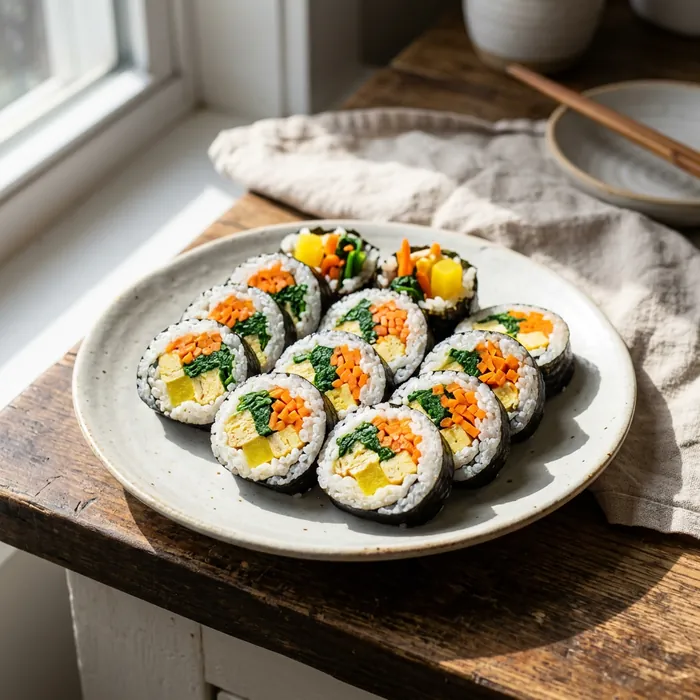
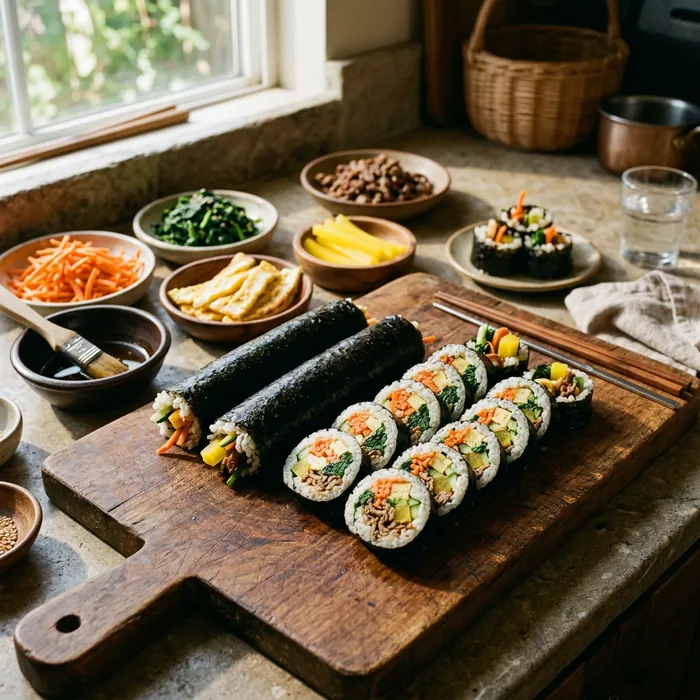
Gimbap is a popular Korean dish consisting of rice and various fillings rolled in sheets of dried seaweed. Often mistaken for Japanese maki, Gimbap typically uses rice seasoned with sesame oil and salt, and frequently includes cooked or sautéed vegetables, egg, and sometimes meat. It's perfect for picnics, snacks, or a light lunch, and is incredibly versatile, allowing everyone to find their favorite version. Prepare this colorful and delicious roll and enjoy the fresh flavors of Korean cuisine!
ingredients
Steps
Prepare Rice & Vegetables
Rinse the rice thoroughly until the water runs clear, then cook according to package instructions. While the rice cooks, prepare the fillings: julienne the carrots and sauté them in a little oil over medium heat for 3-5 minutes until tender. Blanch the spinach in boiling salted water for 1-2 minutes, then immediately transfer to ice water, squeeze out excess water, and season with a pinch of salt and sesame oil. Julienne the cucumber and pickled radish. Slice the imitation crab sticks lengthwise into thin strips.
Season Egg & Rice
Whisk the eggs with a pinch of salt. In a pan, make a thin omelette from the eggs, let it cool, and then cut it into thin strips. Once the rice is cooked, spread it out in a large bowl and mix with 1 tbsp sesame oil, 1 tsp salt, 1 tbsp rice vinegar, and 0.5 tsp sugar. Let it cool to room temperature.
Roll the Gimbap
Place a nori sheet on a bamboo rolling mat, shiny side down. Wet your hands and spread a thin layer of rice over two-thirds of the nori sheet, leaving about a 2 cm empty strip at the top edge. Place a strip each of carrots, spinach, cucumber, pickled radish, egg, and imitation crab on the bottom third of the rice. Carefully roll up using the mat, pressing firmly, until you have a nice, tight roll. Moisten the empty edge of the nori with a little water to seal it.
Slice & Serve
Repeat the rolling process with the remaining nori sheets and fillings. Once all rolls are made, brush a little sesame oil on the outside of the rolls to make them shiny and prevent drying. With a sharp, wet knife, slice the rolls into pieces about 1.5-2 cm thick. Serve immediately with soy sauce or your favorite dipping sauce.
Extra Tips
► Use a bamboo rolling mat (makisu) for rolling; it makes the process much easier and results in tighter rolls.
► Don't overfill the nori sheets, as it will be difficult to roll and may fall apart. Less filling is easier to work with.
► Before slicing, lightly oil your knife with sesame oil to prevent the rice from sticking and to get cleaner, prettier slices.
Nutrition
| Per 100g | Per Serving 250g | |
|---|---|---|
| Calories | 180 kcal | 450 kcal |
| Protein | 7g | 17.5g |
| Fat | 4g | 10g |
| Carbohydrate | 28g | 70g |
| Fiber | 2g | 5g |
| Sugar | 1g | 2.5g |